The receipts.

We sell automation, so we automated ourselves first. Every system below runs Key's Touch right now: it took the inquiry that became your discovery call, drafted the proposal, sent the contract, and reported the revenue. Ask on any call and we'll show you the live version, not a slide about it.

Built by a Principal Software Architect who has spent a career engineering the systems large companies run on. Same standards, pointed at your operation.

The systems currently shown here were built and measured inside Key's Touch. We label them clearly because we do not present internal results as client outcomes. They demonstrate how we design, integrate, test, and operate production workflows. As external implementations are completed and approved for publication, they will be added separately.

Every lead that hits keystouch.com is scored, in the CRM, and on our phone in under a minute.

Problem

The same leak we warn clients about: inquiries arriving into an inbox, waiting on a human to notice, re-type them into a CRM, and decide if they matter. Speed to lead decides who wins the deal, and a founder heads-down building is the slowest responder there is.

What we built

The intake pipeline running this site right now. Every form submission lands in Supabase, syncs to HubSpot, and fires a Telegram alert to the founder's phone, already scored against a weighted rubric (budget, timeline, AI familiarity, company size, challenge). Score 70 or higher flags HOT and jumps the queue. Nobody re-types anything, ever.

Next.js Supabase HubSpot Telegram API Vercel
Form submittedAny inquiry on keystouch.com, any hour
Scored + syncedWeighted rubric, written to the database, synced to the CRM
Phone alertedTelegram ping, HOT leads (70+) jump the queue
Trigger
A form submission. No polling, no inbox checking, no one "getting to it."
Human checkpoint
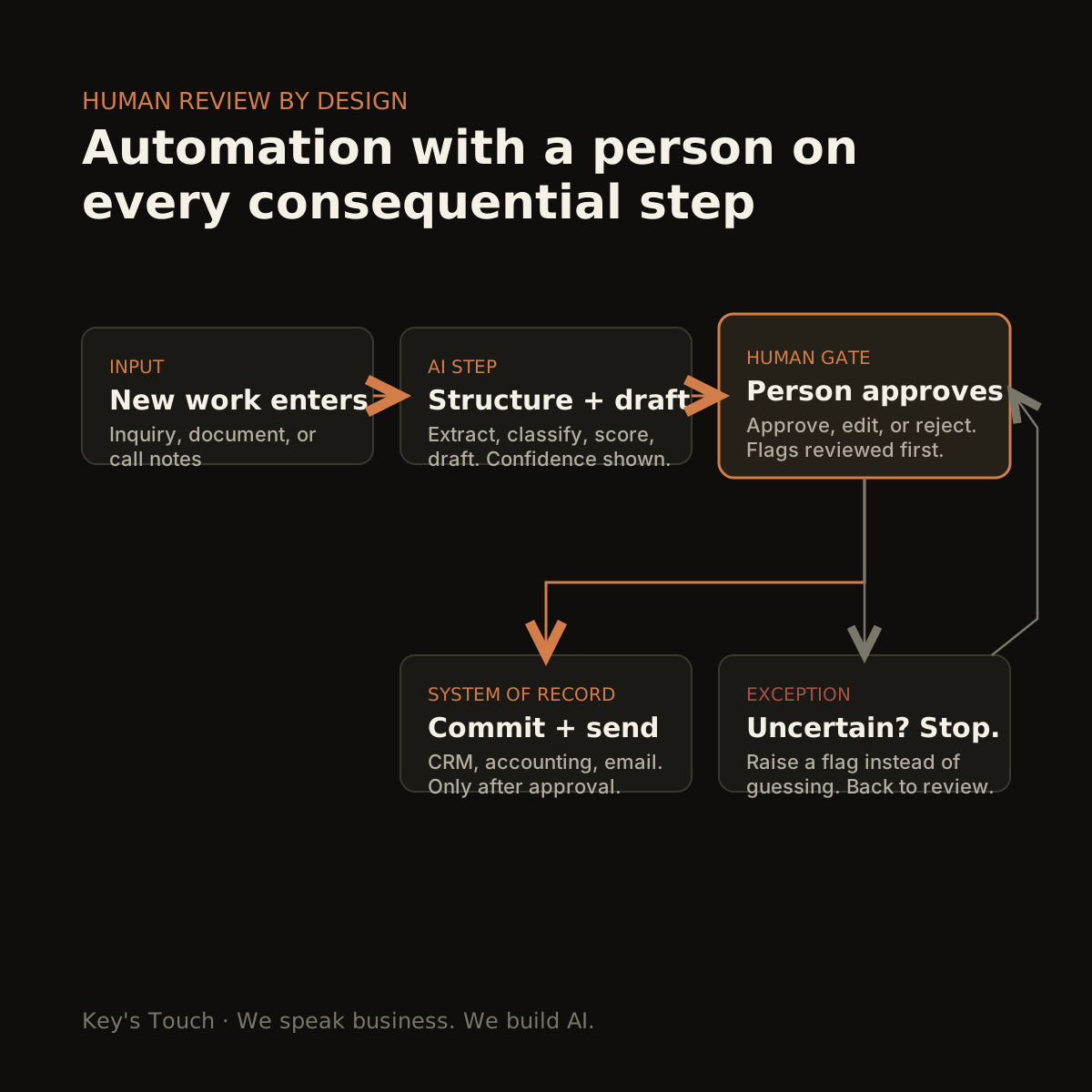
Scoring and routing are automated; the reply the prospect gets is written by a human. The system decides priority, never the relationship.
In your business: your intake form, your qualifying rubric, your team's phones. Case inquiries, service calls, quote requests: the pattern is identical, and it's the first thing we scope in a Money Leak Assessment.
Results
<60s

Form to Scored + Alerted

100%

Leads Auto-Scored

0

Manual CRM Entries

TOUCH: Triage → Unify → Calibrate Live in production today

Industry: Professional Services • Service: AI Automation

Discovery call transcript in. Contract and deposit invoice out. Under ten minutes, human approved.

Problem

The gap between "great call" and "signed deal" is where deals die. Writing the proposal, drafting the agreement, building the invoice, chasing the signature: hours of admin per deal, usually days later, while the prospect cools off.

What we built

Our internal Deal Desk. Paste the raw discovery-call transcript and Claude on Amazon Bedrock drafts the proposal: recommended tier, price, and a scope of work pulled from what the prospect actually said. A human reviews and edits every line before anything sends. One click then renders the engagement agreement as a per-deal PDF, sends it for e-signature (Documenso), and issues the deposit invoice (Stripe). Signature and payment webhooks close the deal and start onboarding automatically.

Claude on Bedrock Next.js Documenso Stripe Supabase
Transcript inRaw discovery-call transcript pasted after the call
AI drafts, human approvesTier, price, and scope drafted; every line reviewed and edited before anything sends
Contract + invoice outPer-deal PDF, e-signature, deposit invoice; webhooks close the deal
Trigger
A finished discovery call. The proposal starts while the conversation is still warm.
Human checkpoint
Hard gate: nothing reaches a prospect without human review and approval, line by line. The AI drafts; a person decides.
In your business: your quotes, proposals, or estimates drafted from the conversation you already had, reviewed by your people, out the door the same day instead of next week.
Results
~1min

Transcript to Draft Proposal

<10min

To Contract + Invoice Sent

2 days

To Build and Ship It

TOUCH: Triage → Unify → Calibrate Live in production today

Industry: Professional Services • Service: AI Agents

The client signs and pays. The portal, checklist, and welcome email exist before we even see the notification.

Problem

The worst first impression in services: the client wires a deposit, then waits while someone manually sets up access, writes a "what's next" email, and builds a checklist from a template. The most excited moment of the engagement, spent in silence.

What we built

Our client onboarding portal. The e-signature webhook and the Stripe payment webhook each report in; when both have landed, the system closes the deal, provisions passwordless magic-link access to the client portal, seeds the onboarding checklist for that engagement, and sends the welcome email. No handoffs, no setup queue, no human in the loop between "paid" and "onboarding."

Next.js Supabase Auth Stripe Webhooks Documenso Webhooks Resend
Both webhooks landSignature confirmed AND deposit paid; either alone isn't enough
Portal provisionedPasswordless magic-link access, onboarding checklist seeded for the engagement
Client welcomedWelcome email sent while the payment notification is still unread
Trigger
Signed contract plus paid deposit, confirmed by webhooks, not by someone noticing an email.
Human checkpoint
None between "paid" and "onboarding," by design. The delivery work that follows is human; the setup ceremony isn't.
In your business: whatever your version of "the client said yes" kicks off, access, checklists, kickoff scheduling, welcome sequence, happens in the excited minute, not three business days later.
Results
0

Human Touches, Pay to Portal

100%

Of Steps Fire on Webhooks

1 day

To Build Phase One

TOUCH: Outline → Unify → Hone Live in production today

Industry: Professional Services • Service: Workflow Automation

Nobody here builds a revenue report. The dashboard already knows.

Problem

The third leak we warn every client about: leadership flying blind between manually assembled reports. What's in the pipeline, what's booked, which deposits landed, who went quiet: if a human has to compile it, it's stale the moment it's finished.

What we built

A live deals dashboard that reads the same database the intake pipeline and Deal Desk write to. Revenue tiles for pipeline, booked, and deposits. A per-contact timeline of every email, status change, and signature event. Stage tracking that only moves forward, so history can't be quietly rewritten. Nobody updates a spreadsheet; the systems report on themselves.

Next.js Supabase Vercel Event Log Architecture
Systems write eventsIntake, Deal Desk, and onboarding all log to one database
Dashboard reads livePipeline, booked, and deposit tiles straight from the source
History stays honestStages only move forward; the past can't be quietly rewritten
Trigger
Continuous. Every email, status change, and signature event lands in the timeline as it happens.
Human checkpoint
Humans read it and decide; nobody feeds it. If a number is on the dashboard, no one typed it there.
In your business: the Monday-morning report nobody had to assemble, reading from the systems you already run. Leadership sees today's truth, not last week's export.
Results
0

Reports Built by Hand

Live

Pipeline, Booked, Deposits

1

Source of Truth

TOUCH: Outline → Unify Live in production today

Industry: Professional Services • Service: Custom Software

Want your operation on this page next?

These systems run our business. The next ones we build run yours. Book a free 15-minute Discovery Call: we'll map your biggest time sink, spec the fix, and show you exactly what the ROI looks like before you spend a dollar. Case-study clients get priority scheduling and our full attention.

Book a Free 15-Minute Discovery Call →